Deeper

I should be working right now on Sterling Editing projects, on my new screenplay, on keeping my little corner of the internet here bright and shiny (otherwise known as, Dude, where’s the content?; to which the writer answers In the small part of my brain that isn’t doing Everything Else…).

And I am working, mostly. But also, I am thinking about the turn my life has taken in the last year; or should I say, the dive. Not a dive as in a drop into negative space, although I’ve definitely spent part of the last 12 months in freefall, and that’s been no fucking fun. But that’s not important. It doesn’t really matter when or how we fall, or why, because we all do. What matters is where and how we land.

Ishita Gupta wrote earlier this year about lessons she’s learned. It’s the list of a person who likes to grow, and I recognize that. I’ve spent an enormous part of my life growing my way toward myself, looking for pieces of myself in everything from boarding school to driving a delivery truck in Chicago to ASL to… well, I’ve been a lot of places.

But these days I find I am not traveling wider so much as deeper. Diving down farther into my writing, my marriage, and an increasingly unsentimental understanding of myself that is surprisingly liberating. I’m learning simple things:

  • I am not more special for doing good stuff years ago. I am not less special in spite of some really spectacular stupid behavior. I own it all, and it’s all part of the mix, but it’s not where I live. I’m making plenty of choices now that I can celebrate or beat myself up about, if I really need to.
  • I’d rather celebrate.
  • I choose who to answer to.
  • I have some powerful amazing brilliant things to do. I will do the fucking work.
  • I can’t have whatever I want, but I be whatever I want.
  • Shakespeare really was a genius, and I want to play Lady Mac on a professional stage before I die. (Hah. Bet you didn’t see that one coming. I’ll explain some other time.)

I told Nicola over lunch today that I was still looking for a way to bring all these ideas together. Oh, she said, You mean that you’ve figured out the essential parameters of who you are and now you’re going to explore that. And I said, Well, yeah, and ate my sandwich.

So there we are. For what it’s worth, I feel like the universe shoved me hard spang right into myself, and I really, really want to stick this landing.

What are you learning these days?

Those crazy kids got married

wedding
photo by Mark Tiedemann

…16 years ago today.

Love is a four-letter word spelled T-I-M-E. — Unknown

Today I don’t give a damn about other people who want so badly to see us not married; I’m sad for them that they aren’t us, and I hope that they have even one percent of the love in their lives that I have in mine. Today is not about rights or legality or the politics of fear: I didn’t need any government’s permission to marry 16 years ago, and I still don’t.

Marriage is about making each other better. And today is about how much better I am in every way because of Nicola.

Drive

A friend is thinking about moving to New York, and the other day she said, I wouldn’t need a car, but I’ll really miss driving.

I grew up in a time and place that was all about driving. Not so much the 16th-birthday ritual of the license and the my-own-car visions that come with it, but driving as a way of life. Our city wasn’t big enough to have urban neighborhoods with everything you need in walking distance. The bus system was okay but not great, and there were no subways or light rail. I’d only ever seen subways in movies until I lived in Chicago; although the Busch Gardens Theme Park in Tampa did have a monorail, even before Disneyworld. It’s amazing what makes you proud when you’re eight.

Every adult I knew drove. Some of the cars were old and clunky; some were pickup trucks; some were Porsches (our little city was a pretty big world in certain ways). I loved being taken to school in my dad’s 1960-something black Barracuda; I loved it even more when he bought a (retired) hearse and drove that for a while (much more storage room than a station wagon….). Every once in a while we’d get up early on a Sunday morning and drive to the shopping plaza (yep, this was before the mall, before the internet, before VHS, before CDs, and even before Paul McCartney and Wings — I am practically an historical relic). All the plaza stores were closed on Sundays, the parking lot was empty, and Dad would put me on his lap behind the wheel and let me steer. When I was tall enough to reach the pedals, he let me drive.

My mom and dad were both excellent drivers: smart, safe, fast, precise, full of the joy of controlled speed on an open road. We often spent weekends in auto rallies and autocross: my mom drove, my dad navigated, and I sat in a pillow nest in the backseat and read a book, or watched the road, or listened to my folks work out the clues. One night, after one of these rallies, there was the usual association dinner with door prizes, and I was asked to draw the prize tickets. I think I was maybe nine, and the only kid there… the grownups never seemed to mind because I stayed quiet and still, ate my food, and just listened. It’s amazing what adults will say around a child who is just listening… No one was ever evil or gross, but they were perhaps more revealing than they might have intended. (Never mind about the time we all went skinny-dipping in the hotel pool after the Daytona 500; that wasn’t evil or gross either, but revealing in a whole different way…)

Anyway, this night the group president decided I should draw the tickets. We got to the big prize — a set of four very nice Semprit radials. My dad called out from his table, “Go ahead, honey, win us those tires!” And I said, “Okay, Daddy,” reached into the fishbowl (which was over my head, I couldn’t see into it), and pulled out his name.

What could they do? They gave him the tires. That was a nice night.

Before I drove a car, I drove my bike. I talked about riding it, but in my heart I was driving. I drove with precision and grace. I drove often with no hands up hills and down them, around tight corners, never falling, never being afraid (I was pretty physically timid in other ways, but never on my bike, even with no hands). There was nowhere I didn’t go: huge arterial streets, back alleyways, the best neighborhoods, gravel streets with no sidewalks where big dogs growled behind chain-link fences, commercial strips with bars and auto shops, the 5-mile sidewalk along the bay and the big bridge across the water to the hospital; for a girl on her bike, that busy bridge was the best hill available in three counties. It was Florida: the only hills we had were the ones we built ourselves.

I took my Driver’s Ed in a big boat of an American automatic transmission car, but real driving for me has always been stick. My first two cars were standard transmission Toyota Corollas. Sturdy little mechanically-reliable fast red cars. I felt like the Queen of the World in those cars, and I could drive. I knew how to downshift at the curves, how to upshift by the sound of the engine, how to control a skid, how to change a tire, and (one-hair raising evening) how to escape from a car of drunk men trying to run me off the road. I have driven tens of thousands of miles alone across the US. I know the rhythms of the road at 3 AM, when truckers own the highways and will take care of you as long as you know the rules; at noon in the busy DC – Baltimore corridor where the roads always seem to be under construction; over the Appalachian passes in Tennessee, where you’d better know what second gear is for on some of the steeper grades, and where in earlier days you could find the best breakfasts in America. I know the location of every Burger King between Chicago and Tampa. I can eat an entire meal while driving in interstate traffic. I have slept in my car on the side of the road. I have followed exits just to see where they go: I’ve always liked a mystery drive. I do not get lost for more than a few minutes, ever: not because I’m so brilliantly directional, but because I know I am a driver, and drivers keep moving until they find their way to, or find their way back.

I miss riding the clutch on a hill waiting for the light to change. I miss seeing the surprised face of the guy in the Trans Am in my rearview mirror. I miss the hundreds of miles of open road between me and any of my problems, when the only thing that I can do is put on the music and drive. I miss fifth gear. And I sure as hell would miss driving.
Sunday advice

It’s Sunday. I have the world’s longest list of stuff to do, mostly things I am pleased to be doing. There will be music, sausage for breakfast and vegetable beef marrow soup for lunch, lots and lots of lovely tea all day, screenwriting and a little fiction and some work on a New Project Coming Soon that Nicola and I are very excited about; and then off to dinner with a friend.

I want you to have a nice day too. So please, go here and follow the instructions.

And enjoy your day.

Another thousand words

About a month ago, I posted this:
 
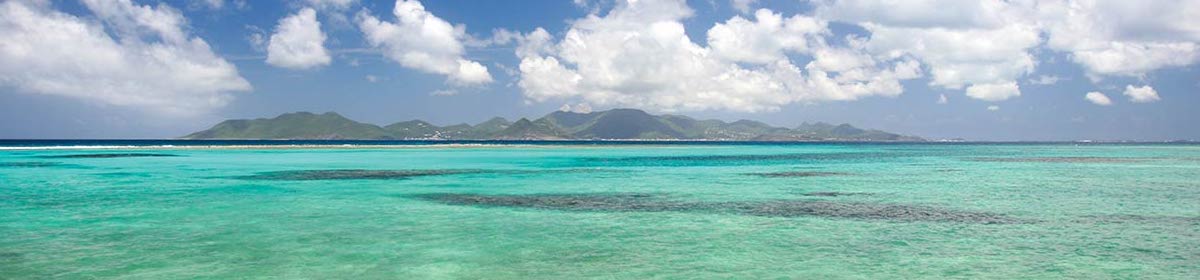
musha-cay
 
Here’s the bigger picture, in all kinds of ways:
 
mushacay
 
Time out of life. Time out of the everyday world. Time out.

Time in the bigger world, the realer one, water and sky, sun and stars. Time in myself without the daily stress, without the constant doing of things that somehow seem so important when I’m looking at my calendar, and somehow so unimportant when I look at this picture.

Ah, it really would take a thousand words to say it all. I’ll stop here.

Enjoy your day. Wishing you a measure of space, of time out, of time in.

My love letter to Sady

No, I didn’t find a new sweetie; it’s not that kind of love (grin)…this is 21st-century newfangled blog love.

——–

Dear Sady,

I love your blog . I discovered it thanks to a reader who pointed me to your post on Jennifer’s Body. Hmm, I thought, who is this cool woman who is such a master of the exclamation point and talks about ladybusiness?

I like that you are so damned opinionated and that your opinion is (in the cogent words of Jef Mallett), the result of thought and not a substitute for it. I think your discussion with your Gentleman Associate about the importance of print media is very smart and fall-down funny. I like your FAQ.

But here is the post that has made me love you. Because I have met those special snowflakes you speak of; and, sadly, I’ve been one too. I’m working on that, and sometimes when I need help I will come back to this post and think of you fondly.

And I’m also working on the part where I need to get behind my own self sometimes and push; where I need to SHOUT and !!! if that’s what it takes. One reason I admire your blog-voice so much is that I sometimes wish for more of that energy in my real voice, in those moments when I have to stop someone from stepping on me out in the world. That can be hard for me; but it’s important to have more than one tool in our toolbox, no? I am good at facilitating; but still learning to shout not just in an incoherent voice, but with intent and reason behind it. An opinion that results from thought, in a voice that’s maybe a little louder than is comfortable for the special snowflake it’s directed at. You are helping me with that, Sady, and I thank you.

I don’t get to talk about spoons

I don’t get to talk about spoons.

If you’re thinking Huh?, let me point you to The Spoon Theory by Christine Miserandino.

My partner has MS. She’s a member of the disability community. I’m not. She gets to talk about spoons. I don’t.

What this means in the simplest words I can find is: being a disabled-bodied person is a different experience from being an able-bodied person, regardless of other factors of race and class and so on. It’s different. Being a person of color in this culture is a different experience from being a white person, regardless of other factors of class and gender and so on. It’s different.

If you don’t share an experience of difference — the kind of difference that hampers your access to physical space, cultural privilege, opportunities, social respect, or being seen as fully human in the eyes of the people around you — please don’t turn around and make that experience about you so you can then participate in it.

I don’t want to hear about your personal “color-blindness” or your paean to how brave the crippled people are because they have so much more to deal with. Nor am I concerned today with whether someone else’s difference counts as much as yours. Difference is, people: can we just acknowledge it and deal with it? And part of dealing means that sometimes you just stand back and give people space to be, to speak about what’s different for them, and to understand that you don’t necessarily get to be different that way too. You can do this even if you don’t think their difference is important, or you don’t understand why it’s important to them, or you don’t see the problem, or whatever. You can, if you choose, simply acknowledge that it’s outside your experience, rather than going on at length about how hard your own stuff is. It does not diminish you if the occasional conversation is not all about you. There is a great vast amount of the world that is not about you, and sometimes people want to talk about it.

So stop making it about you and start listening to how it is for the people who are Not You. Take their word for their experience. And understand that sometimes they just don’t give a shit whether you have suffered too. And today neither do I. I don’t care whether you think it’s fair that the disabled community wants to own the idea of spoons, the same way I don’t care whether you think it’s fair that some people have spaces where white folks don’t get to speak their mind about the challenges of whiteness. I just don’t care right now.

And I’m not here to fight about it. It’s a big world and you can find your own space in another part of it, so if you believe differently, please go express it on your own blog. I will turn off comments in a New York second if things get even the slightest bit whiny or trollish. I’m just not in the mood. Is that unfair? Tough.

Another fearless story

There’s been a fair amount of conversation recently on this blog about hope, and why people keep going in the face of hopelessness. Sometimes the universe demonstrates lovely timing: along comes a beautiful new ebook from Fear.less, written by Mawi Asgedom, that is all about hope and perseverance. Asgedom packs a lot into a small (six page) package, and what speaks to me most right now is his talk of courage, resilience and advice on how to persevere.

The moment of courage in a human being’s life is when all the indicators around you tell you that nothing’s going to work out, when you don’t have any evidence whatsoever that makes you feel like you’re going to be happy again. At that specific moment, when you can still step up and do your best, just because you believe that outside your own logic and reason it’s possible in the world, and you’re going to fight for it, that to me is what courage is all about.
 
— Mawi Asgedom

So many stories revolve around a hero faced with the choice to give up or keep going. Those are powerful stories, and they form the core of some of our most hardline cultural beliefs: that perseverance is all we need to win (if you work hard enough, you can do anything), and that stopping equals failure (a winner never quits and a quitter never wins). We put the emphasis on the results. But Asgedom also puts emphasis on the process: on knowing that when faced with the choice, we did our best.

I’m not here to say that persevering is always the right thing; sometimes stopping is the best choice. Billions of human lives have been lived as a string of such choices. I think Asgedom’s deeper point is that we have a choice, and we get to make it over and over again. It’s a lifetime’s journey. If you make a choice you don’t like, then make a different choice next time. Life doesn’t stop when we choose: it only stops when we don’t.

Download the ebook and share it as you like. Sign up at Fear.less to get more as they are released. And let me know what you think.

Wishing you more joy, more love, more hope, less fear.

Giving

This week I heard a piece on NPR about Giving Anonymously, a nonprofit organization that allows anyone to make an anonymous gift to someone you know who is in need but may be too proud to accept your gift in person.

You provide GA the recipient’s mailing address and your credit card number. They contact the person and then send them a check; and ask them to call a toll-free number to leave a voicemail message to verify receipt. They then send you an mp3 of the call so you know your gift is complete. You can hear the NPR piece on the Giving Anonymously website, including some of the messages from people who bought food, medicine for their children, the stuff of daily life.

GA was started by a Washington couple whose neighbor helped them pay their rent one month. They wanted to facilitate individual giving — to family, friends, neighbors — without the sometimes relationship-straining awkwardness that can happen face-to-face, when personal pride and cultural notions collide with need and the very real human desire to help.

I don’t know what it’s like for you, but I grew up with the notion that we solved our own problems and didn’t ask for help. Admitting need was admitting vulnerability; and we were vulnerable enough without admitting it. I still have trouble asking for help sometimes, and even more trouble accepting it gracefully: I often feel the need to rebalance the scales. Nicola points out to me often that people give because they want to: not to feel superior to me, but to feel connected with me, and to feel as though they’ve made my life a little easier. I understand that: when I help, that’s exactly why I do it. So why is it so much harder to receive than it is to give?

I’m fine: I have wonderful family and friends and neighbors who will help me when I need it, whether it’s a home repair or a hot meal or a gift of money. But if you know someone in need who doesn’t have that support, or doesn’t know how to accept it, then here’s a way you can give that demands no tipping of the scales between you. They’ll never know who loved them enough to help them: they’ll just know that someone does.

You can give without loving, but you can never love without giving.
— Robert Louis Stevenson
 
And it’s not just about being able to write a check. It’s being able to touch somebody’s life.
— Oprah Winfrey

Or maybe not yet

Yesterday I pointed you to the Slate.com series on the end of the world US (yes, I do know the difference, but the strikeout thingie doesn’t show up that well in post titles, and I couldn’t resist the REM reference).

Within a half hour of posting yesterday, I found my way to this video. And maybe I’m naive, but I believe that connecting with each other — all of us, every single person on the planet, even if only for a moment — is what can save us from apocalypse. I think President Obama believes this too; and it heartens me — a good word, hearten — that he reads letters, that he responds, that he makes space in his day for our stories and not just The Big News from the Big World.


And seriously, there’s a job I could love — Director of Correspondence. That combination of communication and story and process and management, moving from the big picture of who needs to know what right down to the level of an individual American’s story. Another big what if?

Enjoy your day. And if you’ve got something to say, write the President a letter.

(PS — Happy birthday, Mr. President. I hope you have some fun today.)