Day on

The Platonic ideal I have of “dawn” comes from my childhood in Florida, where the sky is an enormous kid who fingerpaints herself, and she is both exuberant and very, very serious in the focused way children sometimes are; so there are moments of pause, moments of held breath when the sky simply sits still and says Look at me for a while, and then we’ll go on to the next thing.

By my standards there is no dawn in Seattle these days; it’s more that the light simply comes on when it’s supposed to. Blue-black sky, streetlights with frosty halos, an edge of moon and then someone flicks the switch and poof, it’s morning and everything is thin: the translucent pale blue film across the sky; the cold thin sunlight that seems not quite there, as if it’s coming in on conference call; the thin shadows of the people at bus stops, the way they clutch their coats closed and squint into the distance looking for the bus.

I saw today come on through the windows of the gym. I’ve been feeling stressed and just a little beaten down around the edges, and I didn’t expect that looking up from my sore self and seeing a slice of blue sky, crows shaking out their feathers against the few orange and yellow leaves still left on the trees, would make me feel better; but it did. I don’t know why, and I don’t need to. I do know that I found myself thinking of the word daybreak, and realizing it’s the wrong word. There is nothing broken about the day.

Cuffy things

Today I want to go to Musha Cay.

Several years ago, I had an emergency appendectomy. Big drama, midnight surgery… it was odd being wheeled on a stretcher through empty, silent corridors past dark rooms, a bit like suddenly finding myself in the movie Coma, which wasn’t maybe the most cheerful thought to pass out on, but by that point I didn’t care. I just wanted the Bad Stuff out of me.

When I woke up, they brought me Nicola, and then we all went up to a room. The nurse shooed N out the door (it was nearly 3 AM, she was exhausted, and our friend Liz who drove us to the hospital was still asleep in a chair in the emergency room lobby). Then the nurse tucked me up in bed with a contraption that I still, with great fondness, refer to as “the cuffy things.” These are pneumatic cuffs they put on my ankles and calves: the cuffs squeezed my lower legs very gently, alternately, to help keep circulation going and prevent blood clots. They made a gentle wsssh wsssh sound, and the squeezing was like an ongoing massage, and I was warm and full of Vicodin and I knew my dangerous infected appendix was in a dish somewhere far away from me. And I went to sleep.

The cuffy things were unbelievably comforting, to the point they have become iconic for me. Now when I’m feeling tired or stressed, so overwhelmed by all that must be done that it’s hard to focus on actually doing it, I long for the cuffy things. For the feeling of security, of all your problems are somewhere else tonight, you’re safe, just go to sleep.

And Musha Cay is just a Great Big Cuffy Thing for me right now (grin). How wonderful it would be to swoop up a group of awesome people and take us all to a place like this. Where our problems would be somewhere else for a week, where we could play and talk and eat and drink and rest and be alone with the sky and the sea and then be together again.

I figure it’s good to have goals, so Musha Cay is on the list. Until then, I’ll pull out my other comfort strategies. Self-soothing is one of the skills we must acquire early if we’re to survive — we start as kids, with our blankies and teddy bears and all the ritualistic superstitious behaviors of childhood. I don’t have a blankie anymore, but I do:

Cook my mom’s tuna casserole.
Listen to music.
Go to a movie.
Read an old favorite book with a cup of tea and some chocolate.
Take a long hot bath. Sometimes I read in the bath, and sometimes I drink a chocolate milkshake.
Go to the pub. Not so much for the beer as for the journey to the “third place,” where they know me and I feel comfortable, but I don’t have my own problems around me.
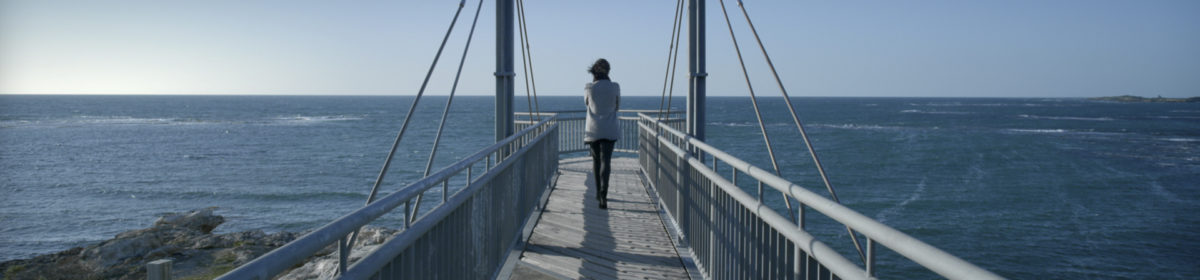
Sit by the sea.
Watch the sky.

Those are some of my everyday cuffy things. What are yours? Whatever they are, may they work well for you always, and may you very rarely need them.

For the gender curious

For those who may be visiting for the first time after hearing my interview on To The Best of Our Knowledge, welcome, and thanks for listening.

I invite you to check out some of the content here that may be of particular interest to you:

Stories
You can read two stories of Mars: “And Salome Danced” (from which I read during the segment), and “Dangerous Space”.

Interviews
Speculating Gender at Ambling Along the Aqueduct — a lengthy interview about gender in life and in fiction.
Reality Break podcast — a lengthy audio interview about the collection Dangerous Space, the character of Mars, my novel Solitaire and my recent experience with screenwriting.

Essays
“Identity and Desire” — the genesis of the Mars character.
“The Erotics of Gender Ambiguity” — an online discussion that took place about “And Salome Danced” and the gender ambiguity of Mars.

And just because I think it’s cool
This story vid created by Karina in response to the story “Strings” (which is included in my collection and which you can read here).

Thanks for stopping by.

Dangerous Space is here

Here is the novella “Dangerous Space,” in PDF format as it appears in the collection.

Please feel free to share it or point people to the link here. You absolutely positively may not republish it on your own site, print it in your anthology, or use it in any way that makes money for you. If you want to do any of that, play nicely and ask my permission.

“Dangerous Space” is about music and love and sex, and the relationship between artist and art, and what happens when we let ourselves and other people into the deep places within us. I am unbearably curious (practically panting) to know how other artists — particularly those who live in the world of indie music — respond to the story.

Enjoy this. I’d love to hear what you think of it.

Other worlds

We’ve believed for years that there are planets outside our own solar system (science fiction writers have known it a lot longer than anyone else, wink.) Recently, scientists have been able to see Doppler and infrared images of some of those extra-solar planets, which was very exciting and made all the SF writers sit up a little straighter.

But we’ve never had an actual picture before.

Check it out — the first “show me” evidence of other worlds. Maybe I just haven’t had enough caffeine, but seeing these little planets busily spinning around their star makes me need to go off and wipe my eyes. I’ll never see those places for myself: but someday, someone will. And right this second, I feel amazingly connected to her, whoever she may be.

Friday pint

Every week I transfer posts here from the Virtual Pint Archives.

You’re getting Friday pints on a Saturday because yesterday I announced the launch of Humans At Work. And you’re only getting two pints because they are long. Ah, we live in a world where constant flexibility is required.

  • That individual thing (December 2003) — Genre, the marketing of books, and (I now see) the first explorations of writing and relationship that found their way into the 2005 essay As We Mean To Go On.
  • Seeing differently (December 2003) — How the survival strategies of the Other affect writing, and a link to one of my favorite essays about writing (and a Big Clue about where the title of A Leader’s Manifesto comes from).

It’s sunny (yay!) in Seattle, and I hope it’s nice where you are too. Enjoy your weekend.

Humans At Work is open for business

Work is a human thing. Let’s treat each other that way.

I am excited, a little scared, and also feeling very satisfied on a deep level — because after many, many years of thought and more than two years of development, Humans At Work, LLC launches today.

I’ve talked about this before, but here’s a recap:

In my corporate life, I built and led teams, developed and managed process, facilitated meetings of 2 to 250 people, taught effective communication and effective meetings classes, served as a company ombudsperson, and learned everything I could about organizational development and dynamics.

And what I learned boils down to this: managing people is the most important job in business. And it’s the job that no one ever really teaches us to do.

Management is behavior. It’s my experience that bad managers are not evil or insane; mostly, they just have no idea how to be good managers. When we get our first management job, no one sits us down and tells us that the most important thing we can do to be successful is to deal well with the other humans in the building — to communicate clearly, build relationships that help everyone be more effective, share information, collaborate on decisions with the people whose work will be affected, and give people control of how they do their jobs. No one teaches us how to do these things. If we’re lucky as managers, we eventually figure out how to be better… generally at the expense of the people who work for us.

And so we’ve all got a Boss From Hell story (some of us have several). We all know the damage that bad managers do to the people they work with. And it’s not just people — business suffers too, because people who are badly managed become angry and disengaged and unproductive. That’s not good for anyone.

It doesn’t have to be this way. It really doesn’t. So I’m going to change it.

I’ve developed an intensive training program called Humans At WorkSM. It teaches basic human management skills to new managers. I have never seen anything quite like it, and I think it’s solid and… well, it’s good. Not just that it’s put together well, but that it feels like I’m doing some good in the world by putting it out there.

Because here’s what I’m doing — think of it as the 21st century approach. First, I’ve written A Leader’s Manifesto, which describes the core skills of good managers, and gives me the chance to testify about why it matters to people and to business that every manager leads from those skills. The manifesto includes unabashed table-thumping and talk of revolution, very fun to write (and, I hope, to read). I hope the manifesto will spread far and wide around the internet, and that people will feel as passionate about its ideas as I do.

Second, I am making the entire Humans At WorkSM program content available free under a Creative Commons License — because I believe so strongly in these ideas that I want everyone to have access to them, whether they can afford to pay for the program or not. There are nearly 400 pages of lesson plans, teaching notes, tools, materials lists and tips for people to set up the program in their own companies. It costs a lot to have me teach the program — my time and my brain are not cheap to hire — but anyone who is willing to do the work themselves will be able to create their own version of the program (for non-commercial use). And I’m available as a consultant to help people do that at a lesser cost than a turnkey program.

I believe that enough people will respond to the ideas of Humans At WorkSM that there will be more than enough work for me. And if I’m wrong, then the ideas that I care about will still be out in the world helping people. No matter what happens with the business, it’s hard to think of that as failure.

My ambitious goal is that every working person on the planet reads the manifesto, becomes aware of the program, and finds at least one idea that helps them make their own work experience better. If you’d like to help with that, I’d be very grateful indeed — because the only way it happens is if people spread the word. So check out Humans At Work, and if you like what you see, please tell everyone — because everyone can benefit from what’s there.
In the room

I love the stories of the journeys people take to make things happen. I’m fascinated when artists talk about how they wrestle with their work, when business executives describe the aha! moments that lead to the big turnaround. I would love to be in the room with U2 as they work out a new album, on a stool in the corner when April Gornik paints, at the table while the jury selection consultant advises the lawyers. I’m into process porn… and so I am enjoying immensely this series of Newsweek articles on the presidential campaign.

A team of Newsweek reporters were given special access to the various campaigns for a year, on the condition that they reported none of their findings until after the election. The result is seven in-depth articles that show the individual campaigns at work, as well as tracing the overall arc that brought Barack Obama to the Democratic nomination and then to the presidency.

It’s fascinating stuff — the campaign seen through the lens of human choices, relationships, how the candidates and their staffs responded to the pressures of the moment. It’s given me the best sense of context I’ve had for the campaign as a whole, and it’s full of observations of the candidates in both personal and political moments.

It’s easy for me to disengage from politics, to feel overwhelmed by the anger and the hyperbole and the sheer competitive win win gotta WIN! frenzy, the self-righteousness and other-hatred that sweeps people up and away. The process feels so dehumanizing to me. But the last weeks of Obama’s campaign made me begin to see him as a real person (as well as a politician)… and now the Newsweek writers have given me a doorway through which I may step back in and remember that everyone in the campaign was human. That it was after all a human process. I’m grateful for that.

Girls and boys and everything between

My 2007 interview with the WPR program To The Best of Our Knowledge will air again this coming week (starting on Sunday). I talk with host Jim Fleming about Dangerous Space, the character of Mars, and gender in fiction and life, and do a brief reading. I very much enjoyed the conversation with Jim — he’s a great host, asked thoughtful questions, and gave me lots of room to wave my arms around (in the way one does on the radio, grin).

If you’d like to hear it, you can find your local station here, or use this direct link to the mp3 of the show. My segment starts at about 38:30.

And in the spirit of it all, here’s a little something I’ve always loved. You don’t have to go far to find the wild side — it’s right there between your ears. Have fun with yours today.


(Click here if you can’t see the audio player.)

Thank you, veterans

Today, war is not the point. The point is that every country needs people who are willing to serve in military forces. We need people who put their minds and bodies between their country and any possible or actual threats to it. These folks train, work, sometimes fight, sometimes are damaged, sometimes recover, sometimes don’t, sometimes die hard in hard places of the world, sometimes die a little bit at a time back home, sometimes go on to live well in the country they have served. Their lives are changed in real and persistent ways by their time in service.

I’m very grateful to everyone I know who has been a member of the armed forces anywhere, including my dad, my stepfather Arthur, my stepbrother Neil, my father-in-law Eric, Ann Holmes, and my dear friend Liz.

Thank you to all veterans, everywhere.