I want this job

This past week, writer Alain de Botton has served as writer-in-residence for Heathrow Airport.
 
AlainDeBotton_420x160
 
The notion is to capture the airport in real time: describe the intensely private moments between travelers played out on a stage so public that there is no audience, only all the rest of us passing through, focused on our own destinations and our own dramas — people in the bubble-space that airports make. People saying hello, goodbye, why do you have to go, why won’t you come with me? And de Botton is also exploring the private areas of the airport, the guts of the place and the people who keep it going, all the complex machinery and process and systems and training which most of us only experience as a step to wherever we’re going: Please place all metal objects in the tray. The doors are about to close: please step away from the doors. Collect your baggage at Claim Area 16.

Here’s an excerpt of de Botton’s real-time writing during his week in residence:

Some lovers were parting. She must have been twenty, he a few years older. Haruki Murakami’™s Norwegian Wood was in her bag. They had oversize sunglasses and had come of age in the period between SARS and swine flu. They were dressed casually in combat trousers and T-shirts. It was the intensity of their kiss that first attracted my attention, but what had seemed like passion from afrar was revealed at closer range to be unusual devastation. — Alain de Botton, in Heathrow Airport

We’re different writers; already my writer-self has been itching to get in there next to him and write it my way. And that tells me more than anything that I want a gig like this. It goes right to the center of my love of story, my fascination with what human beings do and say and feel and want, and my intense interest in how things work (on mechanical, structural, process and human levels). I’d love to have this kind of access and freedom and space to weave together the story of a place by telling stories of its systems and its people.

Airport; large hotel, or an island resort; train station, or a passenger train on a long journey; bus station; stadium; theatre; border crossing; an enormous outdoor concert space; a state fair… and that’s just off the top of my head.

Someone please give me a week of this, she said to the universe.

And where would you like to be writer-in-residence for a week, or where would you enjoy reading about if they had one?

My day on Author August

Today is Kelley Eskridge day on Author August at the Science Fiction Message Board, and I hope you’ll join me there.

Author August is designed to introduce readers to writers whose work they might not otherwise know. I appreciate that immensely and am delighted to be included. So please stop by and join the discussion, and take time to find out about the other writers who have been highlighted so far. You can drop in anytime — the discussion isn’t limited to a single day.

(And I’ll also be reminding you next week to head over again for Nicola‘s turn in the spotlight on August 20).

Author August

The Science Fiction Message Board’s Author Central forum has begun an “Author August post-a-thon extravaganza.” Here’s the scoop from Author Central:

From SF’s earliest days to the latest hot new talent, this 4th annual event has as wide-ranging a list of writers as anyone could wish to see. Every day during August a different author will be spotlighted in their own thread in our Author Central forum. We encourage all to visit on that day and post photographs, reminiscences, cover scans, links to appropriate sites, reviews, and other reactions. With 31 days and 31 authors there’s a chance to share what you know as well as learn new things, so come and join in the fun!

I’m jazzed to be included and hope that you’ll join me on August 15. Nicola will be featured on August 20. But don’t wait for us — go on over now and reminisce about favorite writers or learn about writers who are new to you.

Thanks to the Science Fiction Message Board for a great idea.

2009 Author August
8/1 — Alfred Bester
8/2 — William Tenn (Phillip Klass)
8/3 — Gene Wolfe
8/4 — E.T.A. Hoffman
8/5 — Norman Spinrad
8/6 — Lucy Sussex
8/7 — Robert J. Sawyer
8/8 — Phillip Reeve
8/9 — Ian McDonald
8/10 — Ken MacLeod
8/11 — Dan Simmons
8/12 — S.M. Stirling
8/13 — Sean McMullen
8/14 — James Blish
8/15 — Kelley Eskridge
8/16 — Octavia Butler
8/17 — Charles Stross
8/18 — Colin Kapp
8/19 — Fritz Leiber
8/20 — Nicola Griffith
8/21 — Hal Clement
8/22 — J.G. Ballard
8/23 — Alison Sinclair
8/24 — E.C. Tubb
8/25 — Neal Asher
8/26 — Karl Schroeder
8/27 — Jack L. Chalker
8/28 — John Varley
8/29 — Alan Dean Foster
8/30 — David J. Williams
8/31 — Kurd Lasswitz

Nicola, granted!

My sweetie just opened her mail and found a lovely letter from the Society of Authors informing her that the Authors’ Foundation have awarded her a grant to further her work on her current novel. And they sent a check (hmm, they are English, so actually they sent a cheque).

Many (zillions) apply for these grants, and few are chosen; and I have been yearning for her to get some love from the English Literary Establishment. In that world, there is no greater love than a) money and b) Big Awards with Fancy Dinners, which I fully expect to materialize as soon as this book — this lovely, granted book — is published.

I’m so proud of her I could burst. In anticipation of all those BAwFD’s-to-come, we are taking ourselves out to our neighborhood place for a proper dinner to celebrate our day of Irish radio and English literary love.

The why

A handful of books by Barbara Hambly — the first three books of The Darwath Series and the first two Sun Wolf/Starhawk books — are on my shelf of old friends, full of people I’ve traveled with often in my head and still find good company. One reason I go back to any book repeatedly is that if I’ve changed in some way, my experience of the book changes too. I see new things; I feel old things differently; in an utterly familiar landscape, I suddenly find myself in a place I’ve never been.

I love those moments. I love that stories can be elastic, can stretch or reach or go deeper with us. I suppose this is why I shake my head at the academic approach to fiction, the focus on nailing down what a story means. Well, who are you when you read/see/hear it? Meaning is participatory.

And so, several weeks ago, a passage I’ve read at least 20 times in the last 25 years suddenly seemed printed in neon, as if a hand reached up from deep inside me, flicked my brain hard, and said Pay attention, this one’s for you:

“Success in war,” he went on, “is measured by whether or not you do what you aim to — not by whether you yourself live or die. The success of a war is not measured in the same terms as the success of a fight. Succeeding in a war is getting what you want, whether you yourself live or die. Now, it’s sometimes nicer to be alive afterward and enjoy what you’ve fought for — provided what you’ve fought for is enjoyable. But if you want it badly enough — want others to have it — even that isn’t necessary. And it sure as hell doesn’t matter how nobly or how crudely you pursue your goal, or who makes allowances or who condescends to you in the process. If you know what you want, and you want it badly enough to do whatever you have to, then do it. If you don’t — forget it.”
 
The silence in that single corner of the half-ruined tower was palpable, the shrill grunts and barked commands in the hall beyond them seeming to grow as faint and distant as the keening of the wind across the moors beyond the walls. It was the first time that he had spoken of war to them, and he felt all the eyes of this small group of tiny women on him.
 
“It’s the halfway that eats you,” he said softly. “The trying to do what you’re not certain that you want to do; the wanting to do what you haven’t the go-to-hell courage — or selfishness — to carry through. If what you think you want can only be got with injustice and getting your hands dirty and trampling over friends and strangers — then understand what it will do to others, what it will do to you, and either fish or cut bait. If what you think you want can only be got with your own death or your own lifelong utter misery — understand that, too.
 
“I fight for money. If I don’t win, I don’t get paid. That makes everything real clear for me. You — you’re fighting for other things. Maybe for an idea. Maybe for what you think you ought to believe in, because people you consider better than you believe in it, or say they do. Maybe to save someone who fed and clothed and loved you, the father of your children — maybe out of love and maybe out of gratitude. Maybe you’re fighting because somebody else’s will has drawn you into this, and you’d rather die yourself than tell her you have other goals than hers. I don’t know that. But I think you’d better know it — and know it real clearly, before any of you faces an armed enemy.”
 
— from The Ladies of Mandrigyn by Barbara Hambly.

When the student is ready, the teacher appears. Sometimes sideways — because suddenly for me this passage is not about war, it’s about essential clarity. It’s about the fact that all the guts, risk and insane persistence I can muster is not enough if I am not clear why I’m spending them: why I’m spending myself — my time, my fierce but not boundless energy, my attention, imagination, love, fear, capacity for joy, my hunger for growth. All my life I have seen something I want and literally thrown myself at it. And I am only understanding now (and the smack smack smack you hear is my hand against my head) that the times it works best — St. Paul’s, Clarion, Nicola, Solitaire, Dangerous Space, screenwriting — are the times when I am crystal clear about not just what I want, but why.

I value clarity: specificity in writing, goals that are definite and delineated, an understanding of my options. I work especially hard to be clear about my values; it’s important to me to know why I do things. That been part of my puzzlement these last weeks, trying to understand why this small part of a story is suddenly making me scratch my head (which often comes before the smacking, it turns out). I’ve been telling myself, I get the importance of clarity, so what’s the deal here?

And here’s the deal. I know I’m a writer — real clear about that — but I’m at a crossroads. I have to decide on my next project, and I find it is no longer simply a question of what, but why?

Three years ago, I threw myself into revising the screenplay that is based on my novel. If it’s true that it takes 10,000 hours of practice to become expert, then I’ve easily got 4,000 already, and I got it in six- or eight- or ten-week-long marathons of 12 to 14 hours a day, with all the fatigue, fear, frustration, hope, hopelessness, exultation, and sheer bloody suck-it-up-and-start-again that important struggles bring with them. It wasn’t a war, at all, but it was just like one: it required that I test Nicola’s patience, sacrifice things I wanted, make myself utterly vulnerable, fail in public, and learn some things that please me and others I really would rather not have known. And it required me to endure. I got so fucking tired; but I am crystal clear on why I did it, and regardless of whether it ever gets on screen, it’s one of the best choices I’ve ever made.

And now we have a script that genuinely rocks, and although I will continue to work on it — there are always more changes, more improvements, more sandpapering to do — it’s also time for me to move on. I have to find the next thing to fall in love with, to begin spending myself on. And what I’m understanding now (hah, and you thought I’d left my point in the dust) is that I have to find a different why.

I have at least two novels and three screenplays coming to life in me right now. It’s no longer a question of which of these stories am I burning to tell — these days, if they don’t burn, they don’t stay with me long. Life is too short not to be on fire for my work. But I must choose. So if a novel, why? If a screenplay, why?

Part of the reason that why is so important is that I am finally understanding I can no longer cling to the strategies that have worked so well for me. In the words of the passage above, a war isn’t the same as a fight. I can’t just throw myself at something and hope it’ll all work out. If the project is fiction, well, I’ve got way beyond my 10,000 hours there: I’m an expert, and I don’t have to run into a wall at 100 mph over and over and over to make it happen. If the project is screenplay, then I’m no longer the beginner who needs to do twice as much work as someone else in order to simply keep up: and, as necessary as that constant 100 mph crash was to my beginning, it won’t help my learning in this intermediate stage.

I’m comfortable with the crash. I did it with the screenplay, I did it with “Dangerous Space,” and it worked. And therein lies the trap: because I’ve been trying to decide what to write next as if I would automatically write it the same way, but you know, that won’t work anymore. It’s a beginner’s approach. If I keep using it, it will simply ensure that I don’t learn how to be an expert — how to be conscious, efficient, aware, intentional — no matter how many hours I practice or how fast I run at the wall.

I have been stuck halfway between what and why.

This isn’t a war, but it’s just like one. Swinging around a sword with my eyes closed will get me exactly nowhere. I’m going to have to be just as clear about what I want next, and just as bloody-minded about getting it. But I have to find a new path. It’s no longer enough to just do, do, do, because although I’m good at that, I also see that it will not get me where I want to go.

When I was younger, I found my essential self through doing. Now I have to find it through the why.
Hug that cactus

A couple of days ago, Nicola posted her conclusion that traditional publishing is dead. And she pointed people to the launch of OR Books, who will publish only in e-book and print-on-demand formats — and put big bucks into online marketing campaigns for every book.

I think this is a great strategy, definitely both author-friendly and publisher-sustainable. But I don’t think traditionally published books will necessarily vanish from the earth. This isn’t (yet) the same paradigm as videotape to DVD, where one delivery mechanism kills another in a frenzy of social evolution: I think it’s more of an expansion and an embracing of an audience in transition. Perhaps someday books that you can just pick up and look at in a retail location will be a rarity: but baby boomers are still the biggest consumer demographic in the US, and if we read, many of us would rather read an actual book.

Many of us will buy print-on-demand — I expect POD awareness to reach a tipping point within a couple of years when the technology is better integrated into traditional brick & mortar retail, and when it’s transparent on Amazon (meaning that you buy a book that interests you without needing to know whether it’s in inventory or being printed on demand). But the current challenge of POD, apart from the mainstreaming of it into an older late-adopter demographic, is the aura it still carries of “vanity publishing” and the implication that if it were a Real Book, and the writer was a Real Writer, then a Real Publisher would be supporting it. And that’s very often true (stay tuned to this space for an upcoming rant about how The Intarwebs have made it possible for any shmoe with an online connection to persuade herself she’s every bit the Real Writer by benefit of her sudden ability to publish her work). But not always — there are plenty of brilliant writers who can’t get traditionally published these days — and I expect more of them will find homes with businesses like OR Books. That will help change the perception of POD.

And what will also help is a new paradigm of marketing. Money goes farther online; if it’s done right, new works can be brought to the attention of their potential audience more efficiently, effectively, and more enduringly (I recycle newspapers and magazine, but the pixels are always with us in this brave new hyperlinked Googleverse).

And can traditional book publishing be saved? Jonathan Karp has some good ideas about how publishing needs to change in order to survive.

It seems likely that the influence and cultural centrality of major publishers, as well as other producers of information and entertainment, will diminish as digital technology enables more and more people to create and share their work. This is exactly why publishers must distinguish themselves by doing better what they’ve always done best: champion books that offer carefully conceived context, style and authority.
 
— from “This Is Your Wake-up Call” by Jonathan Karp.

This isn’t just true for traditional publishers, but also for the new kids like OR Books and all those who will adopt their online/POD model. In a world where an unlimited volume of “books” can be available (those pixels are very efficient that way), readers find ourselves increasingly freaked out by the choices: how do we know what’s good? I think what Karp is saying is that publishers need to continue, and in many cases return to, being quality content filters as opposed to churning out the copycat thriller of the week.

Some people will howl and accuse me of elitism. I suppose if you think that shmoe we talked about is automatically a Real Writer, then yes, I’m elitist as hell. Writing is important to me. It matters that it’s done well. And books are important to me: I want them to survive so I can read them, write them, share them, peruse their spines on my bookshelves when I’m looking for something to read (try doing that on a Kindle — it’s maddening). That’s going to take, as Nicola says, a willingness to grin and hug the future. For many writers and publishers, that’s a bit like hugging a cactus, but I expect everyone will cope — we have to. And the irony is that returning to old-school values — fewer books, more editorial focus, more long-term development of books and authors — may be a big part of what saves publishing in the end.

A little insane…

A self is deciduous, it leafs out as one grows, changes with one”™s seasons, yet somehow stays briskly the same. The brain composes a self-portrait from a confetti of facts and sensations, and as pieces are added or removed the likeness changes, though the sense of unity remains, thanks to well-furnished illusions. We need illusion to feel true.
 
A medley of different selves accompanies us everywhere. Some are lovable, some weird, some disapproving of each other, some childish or adult. Unless the selves drift too far apart, that solo ensemble works fine and copes well with novel events. As the psychoanalyst Philip M. Bromberg writes in Standing in the Spaces: “Health is not integration. Health is the ability to stand in the spaces between realities without losing any of them. This is what I believe self-acceptance means and what creativity is really all about — the capacity to feel like one self while being many.”
 
— Diane Ackerman, from An Alchemy of Mind: The Marvel and Mystery of the Brain

I love these ideas: they reflect my experience of myself as a person and a writer, and I so admire when I see other writers working with them. And so I thought of them again as I was reading screenwriter Craig Mazin’s post about the insanity necessary to create good characters — which I imagine as standing between the spaces of my selves in order to create a self that isn’t me, and to make her so real that her story becomes real for you too.

And of course it’s not only writers who do this. As Mazin points out, we all do it when we dream (hmm, well, okay, I know people dream differently, but I tend to assume that things like this are hardwired…). And I suspect that there are many folks in the world, like me, who spend part of our lives enjoying “waking dreams” — for me, these are an odd but very enjoyable balance between seeing a private movie in my head and feeling/behaving as though I were really living it. It happens a lot with music, which is one of the reasons I love music so much. But these moments can come anytime, and I know they aren’t “real,” but they sure are real to me.

Is that insane? I don’t know. If it is, then it’s even better for me that I’m a writer and have made accommodation with it, have put some skill and framework around it. Have made a door for it to more safely open and peer out into whatever it is we mean by the “real” world. (More safely for whom, you ask? Well, that’s the real question, isn’t it?).

I hope all your selves are having a lovely day.

In which cat poetry is better than mine

My fifth grade teacher taught us how to write all manner of poetry: sonnet, haiku, cinquain, free verse, ballads…

Ballads! Oh dear, I feel a memory coming on: I am 11. I already have very bad handwriting, which is not allowed in my school and so it takes me ages to copy out My Ballad in acceptable form. And of course it is long (it seems that even then I was already wordy. Already riffing. Well, at least you know it’s not some lit’rary affection I picked up along the way…). And I don’t know if this is funny or sad, but I actually remember the beginning verses…

‘Twas in the gallant days of old
When chivalry did reign
That Gowain did ride to Waterside
His fortune for to gain.

Gowain was an honest lad and bold
The son of Duke LaRoot.
He did aspire to be a squire
To some knight of repute.

So through the forest he did go
A-riding down the lane,
When by and by he heard a cry
As of someone in pain.

And so he rode into a glade
And saw a maiden fair
Who in distress lay motionless
And blood was in her hair….

And that, fortunately for you, Gentle Reader, is all that remains of my very first/very last ballad. I suspect I would not have made my fortune in bardic times, you know? But I’ll always be grateful to Virginia Richardson for being the first to teach me about poetry.

And I’m grateful to Henry Beard for his lovely book Poetry for Cats, which has always delighted me. Today I’m particularly fond of this one — I find it clever and cat-like and utterly delightful. Perhaps you’ll like it too.

Happy Monday.

—–
(from Poetry for Cats by Henry Beard)

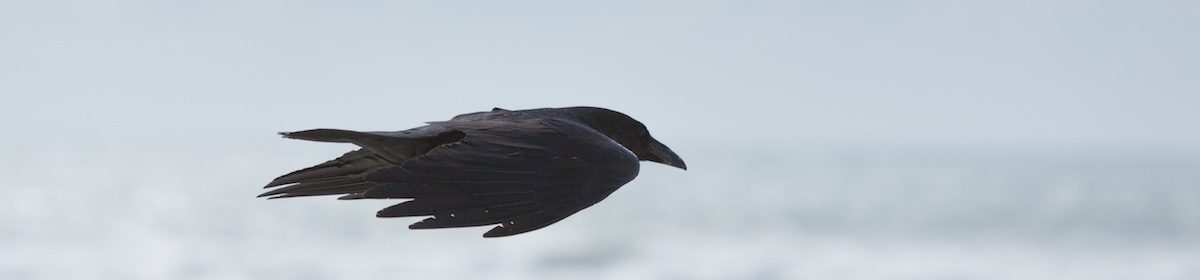
The End of the Raven
by Edgar Allen Poe’s Cat

On a night quite unenchanting, when the rain was downward slanting,
I awakened to the ranting of the man I catch mice for.
Tipsy and a bit unshaven, in a tone I found quite craven,
Poe was talking to a Raven perched above the chamber door.
“Raven’s very tasty,” thought I, as I tiptoed o’er the floor,
     “There is nothing I like more.”

Soft upon the rug I treaded, calm and careful as I headed
Toward his roost atop that dreaded bust of Pallas I deplore.
While the bard and birdie chattered, I made sure that nothing clattered,
Creaked, or snapped, or fell, or shattered, as I crossed the corridor;
For his house is crammed with trinkets, curios and weird decor —
     Bric-a-brac and junk galore.

Still the Raven never fluttered, standing stock-still as he uttered,
In a voice that shrieked and sputtered, his two cents’ worth — “Nevermore.”
While this dirge the birdbrain kept up, oh, so silently I crept up,
Then I crouched and quickly leapt up, pouncing on the feathered bore.
Soon he was a heap of plumage, and a little blood and gore —
     Only this and not much more.

“Oooo!” my pickled poet cried out, “Pussycat, it’s time I dried out!
Never sat I in my hideout talking to a bird before;
How I’ve wallowed in self-pity, while my gallant, valiant kitty
Put an end to that damned ditty” — then I heard him start to snore.
Back atop the door I clambered, eyed that statue I abhor,
     Jumped — and smashed it on the floor.

The Haunting

Busy day, and so although there are things to say and stories to share, today, as they say, I got nuthin’. But since I have written before of Shirley Jackson, and since so many high school students find their way here looking for essay content, I thought I would give you this — a few minutes of Act 1 of The Haunting, the 1963 Robert Wise movie based on The Haunting of Hill House.

This clip begins about 8 or 9 minutes into the movie, after Eleanor (Nell) has been invited to come to Hill House to participate in a paranormal study.

The book, and this movie, have long fascinated me. Eleanor’s overwhelming need to escape is so finely balanced against her clear instinct for good and evil, for what is good or not good for her. And yet, knowing that Hill House is not good for her, she enters into it with only minimal hesitation, with a subterranean lightness of being. There’s a sense of power and freedom in crossing the line of no return… and of course that’s where the horror always comes from, the final realization that what we thought was freedom was just a better trap. It’s subtle and brilliant stuff, both in prose and in film.