Preppin’

I am not really here (grin). I am madly preparing for our Neighborhood Shindig — making potato salad, moving out tables and chairs and galvanized tubs for ice (are we a party-ready household, or what?), and wondering how it’s all going to turn out. I will report back tomorrow.

Coming soon: women in films, keyword searches, jukebox (so many ideas… Duncan Black’s iPod, songs about love, identity songs, dancing music), and more!

Enjoy your Saturday.

21

Nicola and I met 21 years ago today: and life changed utterly between one breath and the next. Everything I have done since then, and all I have become, is in some way connected to that meeting.

I just can’t imagine who I am in the alternate universes in which we never met. I hope those Kelleys are happy and full of joy. They can send me postcards: I’ll be here, having a beer on a Friday afternoon with my sweetie, celebrating the years.

Kick the twilight out of him!

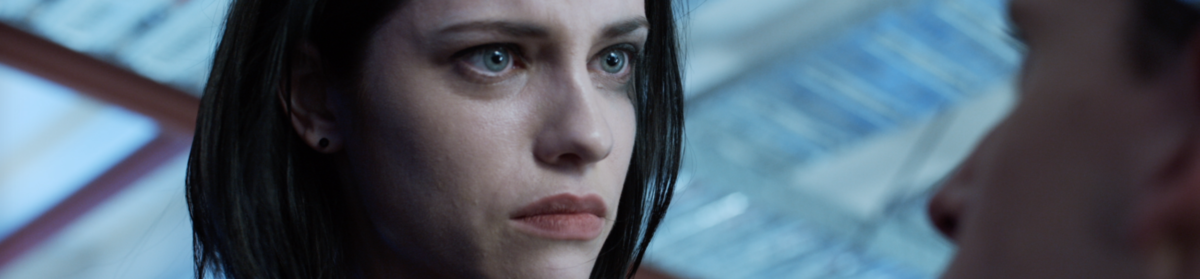
From video remix artist and media activist Jonathan McIntosh comes this fantastic video that puts clips of Buffy the Vampire Slayer (okay, Freudian moment, I just typed Vampire Spayer…) together with footage from the movie Twilight, in which vampire Edward Cullen falls hard for a human girl but won’t, you know, bite her or anything, because that would be too much like teenagers having sex, and we know that never happens.

In this remixed narrative Edward Cullen from the Twilight Series meets Buffy the Vampire Slayer. It’™s an example of transformative storytelling serving as a visual critique of Edward’™s character and generally creepy behavior. Seen through Buffy’™s eyes some of the more patriarchal gender roles and sexist Hollywood tropes embedded in the Twilight saga are exposed in hilarious ways.
 
— Jonathan McIntosh, from his commentary on Buffy vs Edward

McIntosh’s remix is beautifully edited, funny in places, genuinely creepy, and pretty searing in its commentary on what many fiction writers and screenwriters (and directors and producers and readers, not to mention scadillions of teenage girls and boys out there) think constitutes “romantic” behavior between people. If you know a teenager, or a so-called grownup who acts like one, park them in front of this video and tell them the only part of this dynamic that is remotely okay are all the parts where Buffy takes care of herself. And then beat them on the head until they understand that she shouldn’t have to.

You don’t need to be a Buffy fan or know the Twilight story to follow along…

Enjoy.


Get your apt on

I don’t know the original source of this: someone gave it to me about 30 years ago. Because I know all my readers are good-looking, adventurous, talented, charming and of course incredibly smart — the aptest of the apt — I expect you’ll all get perfect scores!

You may use the comment space for your answers.

Make me proud.

———————————–

APTITUDE TEST

Instructions
Read each question carefully. Answer all questions. Time limit: 4 hours. Begin immediately.

History
Describe the history of the papacy from its origin to the present day, concentrating especially but not exclusively on its social, political, economic, religious and philosophical impact on Europe, Asia, America and Africa. Be brief, concise and specific.

Medicine
You have been provided with a razor blade, a piece of gauze, and a bottle of scotch. Remove your appendix. Do not suture until your work has been inspected. You have fifteen minutes.

Public Speaking
2,500 riot-crazed people with swords are storming the classroom. Calm them. You may use any ancient language except Latin or Greek.

Biology
Create life. Estimate the differences in subsequent human culture if this form of life had developed 500 million years earlier, with special attention to the probable effect on the English Parliamentary system. Prove your thesis.

Music
Write a piano concerto. Orchestrate and perform it with flute and drum. You will find a piano under your seat.

Psychology
Based on your knowledge of their works, evaluate the emotional stability, degree of adjustment, and repressed frustrations of each of the following: Alexander of Aphrodisias, Ramses II, Gregory of Nicia, and Hammurabi. Support your evaluation with quotations from each man’s work.

Sociology
Estimate the sociological problems which might accompany the end of the world. Construct an experiment to test your theory.

Engineering
The disassembled parts of a high-powered rifle have been placed beside your desk. You will also find an instruction manual, printed in Swahili. In ten minutes a hungry Bengal tiger will be admitted into the room. Take whatever action you feel appropriate. Be prepared to justify your decision.

Economics
Develop a realistic plan for refinancing the national debt. Trace the possible effects of your plan in the following areas: Cubism, the Donatist controversy, the wave theory of light. Outline a method for preventing these effects. Criticize this method from all possible points of view. Point out the deficiencies in your point of view, as demonstrated in your answer to the last question.

Political Science
There is a red telephone on the desk beside you. Start World War III. Report at length on its socio-political effects, if any.

Epistemology
Take a position for or against truth. Prove the validity of your position.

Physics
Explain the nature of matter. Include in your answer an evaluation of the impact of the development of mathematics on science.

Philosophy
Sketch the development of human thought. Estimate its significance. Compare with the development of any other kind of thought.

General knowledge
Describe in detail. Be objective and specific.
Family is good

I have a mother, father, stepfather and stepmother, and I love them all, and I’m lucky that they love me too. I’m lucky that I was a wanted (even if unplanned) child (who is still surprising her folks on a regular basis 49 years later, grins at parents through the internet). I’m lucky that all my parents have always done their best to understand me, accept me, support me, help and comfort me when I needed it. I love that they love Nicola so much.

I have a family in England who are not mine, but they love me for the sake of their daughter and sister, and for my own sake, and have made me welcome as if I am theirs.

Some families are horror shows. None are perfect. So many families, like mine, have made and unmade and re-made themselves. I hope that you have found a family, whether based on blood, choice, or a little of both; that you have people who scratch their heads over your wackiness and your flaws and will still give you a hug and a cup of coffee, or the last beer in the fridge. Because that’s where it starts, you know? And sometimes that’s all it takes.

And so I know it’s Father’s Day, but I think I will eschew the greeting card companies’ calendar in favor of my own. For me, it’s Family Is Good day.

Thanks, Dad and Mum, for always making me feel loved and wanted and smart and as safe as you could, and for making sure I had so many chances that you never had. Thanks, Art and Celeste, for making a place for me in your hearts. Thanks, Eric and Margot and Anne and Julie and Carolyn, for all the love and care you have shown me. Thank you to Ronnie who has been my sister for (omg) nearly 30 years. Thank you always to Nicola. And thank you to my friends, without whom I would be less than I am, and who are my family too. Love to you all on Family Is Good Day.

Because I can bake

Every once in a while, someone gets an idea that Nicola would be much better off with them instead of what’s-her-name-Eskridge. Fair enough, I guess, although it’s a notion that comes with a built-in disappointment factor of seven million zillion (and about a trillion million zillion if you are a guy). Sometimes, these folks actually think they can get Nicola’s attention by being rude to me: we’ve been in situations where the Hopeful Other, upon being introduced to both of us, looks straight at Nicola with a melty-mouth smile and says, “Oh, I’m so glad that you could make it” — emphasis hers — and then utterly ignores me. Snort. Just so you know, if you do this kind of thing, we laugh at you on the way home.

In fact, here is my best advice to those who would impress my sweetie: if you cannot make Rhubarb Apple Crumble, girlfriend, pack your bags and move your ass out of line.

RHUBARB APPLE CRUMBLE
adapted from a recipe by Lynne Rossetto Kasper

    Filling

  • 3 cups diced green apples (1/2-inch to 1-inch pieces)
  • 3 cups diced rhubarb (fresh or frozen)
  • 1 cup white sugar
  • Grated zest of 1 small lemon
  • Generous pinch of salt
  • Generous pinch of ground nutmeg
  • 4 tablespoons cornstarch
    Topping

  • 10 tablespoons unsalted butter at room temperature
  • 1/3 cup white sugar
  • 1/3 cup brown sugar
  • 1/4 teaspoon salt
  • 2 teaspoons vanilla
  • 1 1/2 cups whole wheat pastry flour (spoon into measuring cup and level, don’t scoop it in or pack it down)
  • 1/2 cup all-purpose flour (also spoon and level)
  • Heavy whipping cream (for serving)
  1. Butter a shallow 7-cup baking dish.
  2. Preheat oven to 350 F.
  3. Combine all filling ingredients in a bowl and turn them gently into the baking dish.
  4. Using an electric beater, cream the butter, both sugars, salt and vanilla at medium speed until very light and fluffy. Scrape down the sides of the bowl.
  5. Combine the two flours and sift half into the butter mixture. Then beat on low for just a few seconds. Don’t overdo it.
  6. Work in the rest of the flour into the butter mixture with your hands until large crumbles form. Be gentle, don’t beat, and don’t overmix.
  7. Spoon the crumbles over the filling in the baking pan. Don’t pack it down.
  8. Bake at 350 on center rack for 45-55 minutes or until topping is golden brown and filling is bubbling.
  9. Remove from oven and allow to cool. Serve at room temperature or re-warm gently in oven.
  10. Serve with heavy whipping cream to pour on top.

Enjoy.

Get happy

If there were in the world today any large number of people who desired their own happiness more than they desired the unhappiness of others, we could have paradise in a few years. — Bertrand Russell

This seems so true to me in so many different ways right now.

It’s easy to see all the ways in which people seem to desire the unhappiness of others, and to actively work toward it. We all, whatever our politics or religion or particular beef with the world, have our litany of things that other people shouldn’t be, shouldn’t do, don’t deserve, and ought to be ashamed of.

And it’s easy to see all the ways in which our culture discourages us from actively seeking our own happiness. It’s selfish to put our own needs ahead of others’. It’s wrong to enjoy things that other people cannot have. It’s better to go along with the party, the church, the family, the crowd, and squeeze ourselves into little one-size-ought-to-be-enough-for-all boxes so that we do not make others uncomfortable. It’s good to make other people happy.

But what about making ourselves happy? When are we taught that our own happiness is fucking essential not just for our survival, but for the survival of others?

I believe that love and fear are the two most powerful forces in the universe. I believe I can trace every choice I make, large or small, back to one or the other. Sometimes the love is the kind that compels me to put my own needs aside; sometimes it’s just the general “golden rule” sort, the social-compact default. Sometimes the fear is the very sensible Run away from the person with the knife kind; but other times, it is fear of difference or risk or having to look too hard at myself, and it disguises itself as common sense, as necessity, or (gods help us) as maturity and duty.

There’s a lot of talk these days about the ways in which parenting is often focused on making the child feel special and “a winner” whether they have done anything worth noting or not. There are certainly a lot of folks who seemingly grow up feeling entitled to praise no matter what; they need it to be “happy,” and we all “deserve to be happy.” Bleh. That’s just a different way of being afraid, a different way of defining our own happiness as something we expect — or demand — from other people. It’s not a very big a step from that to seeking the unhappiness of others when we don’t like their choices, or when they don’t give us the validation that we want.

When we make choices out of that kind of fear — when we demand our happiness from others, or think the only way to win is to prevent their happiness — we die. A little or all the way, in our heart or soul or body. But I want to live. So I’m figuring out these days that my biggest duty is to adjust my own oxygen mask. And I find that the more I focus on making myself happy, the easier it is to share that wealth with others. It turns out that a big part of acting from fear is wanting to make other people feel afraid too; but when I make myself happy, then I’m more ready to help other people make themselves happy as well.

Perhaps that seems obvious or naive to some folks. Oh well. For me, like most simple truths, it turns out to be much deeper on the inside than the outside.

More Peg Halsey

In today’s excerpt of With Malice Toward Some, Peg and her husband Henry have settled in a village called Yeobridge, close to Exeter where Henry is teaching for a year. They have been getting to know the local gentry, and are now at dinner at the home of Mr. & Mrs. Vinnicombe, where Mr. V is about to surprise Peg:

Oct 26th
…When we had finished the music, he suggested whiskey-and-soda, not to Henry only, but to me, moi qui vous parle. In middle-class England a woman is offered a drink with the same degree of frequency with which she is offered deadly nightshade, and at English dinners, when it gets on for ten o’clock and you are numb with cold and half hysterical from hearing about English weather, the gentlemen all have whiskey-and-soda and the ladies, God bless them, have tea! A woman who wants hard liquor at an English dinner has to ask for it, and then her host (nice and warm himself, of course, in woolen clothes, long sleeves and the radiation from a quantity of port) glances questioningly at her husband, as who should say, “She’s a little minx, but I don’t believe a tiny bit would hurt her.” It is a discouraging state of affairs, for (quite aside from the cold storage dining) probably no class of people in the world could do more handily with a little of the stimulation and release of alcohol than well-bred Englishwomen. However, a visiting American does better to refrain from proselytizing, to do her drinking in large batches (if possible) on the maid’s day out, and on other occasions to remain silent and stoically let the pleurisy fall where it may.
 
— from With Malice Toward Some by Margaret Halsey

And here’s a bit, from the summer, about a holiday in Stratford:

June 28th
…The countryside around Stratford is green and plenteous and full of repose. Cushioned with trees and padded with hedgerows, it runs up into little mattress slopes which fade imperceptibly away again. In the villages, the thatched houses rest on their gardens like cuff-links on jeweler’s cotton. An aimless walk through this engaging landscape, on which we started out this morning, ended by taking the whole day. We turned down whatever paths looked promising; crossed empty, sunlit fields that were rough underfoot and hard going, for all their smooth-looking grass; and followed wavy lanes which perpetually unfurled new arrangements of trees and cows. Occasionally we passed farmhouses, sheltered with barns and looking like people who have the covers pulled up to their chins…
 
— from With Malice Toward Some by Margaret Halsey

I am thinking a lot about the difference between rest and relaxation, and picked that passage because it sounds so beautifully restful to me. But today I am not resting: I am organizing, thinking, cooking food for friends who need it, and looking forward to dinner out with my sweetie; an early anniversary celebration because next week is very busy, including a Neighborhood Shindig on the street outside our house, about which I am sure I will have much to say and for which I know I have much to do. At least I will be allowed to drink, moi qui vous parle

Enjoy your day.

Jukebox

Edited to add: I’m sorry to say that I don’t have enough server space for all my audio, so most jukebox playlists become inactive after a few months. This is one. Very sorry. But the music is worth seeking out, it’s great!

To use the E-Phonic MP3 Player you will need Adobe Flash Player 9 or better and a Javascript enabled browser.

These are random happy songs: not particular “favorites” that I seek out, but songs that always make me happy to find them by accident in the world — on the pub CD player, in the supermarket, on the car radio of the guy next to me at the red light. It’s as if I passed someone familiar on the street who suddenly takes me by the hand and says Come on, and walks me to some happy place inside myself.

Happiness is physical; I don’t hear these songs as much as feel them, their rhythms and resonance. I see them, as if they were memories or stories I’ve told myself so often they’ve become something like memory. They don’t make me ecstatic or fierce or electric or take the top of my head off with existential joy, the way some music does. They simply make me happy; although as I get older, I realize that as simple as it is, happy isn’t a door that opens to everyone. I am grateful to this music, and to sunshine and rivers and laughter and cats and my mom’s tuna casserole and the soft ice cream cones my dad bought me in summers when I was a kid, and to so many more simple things that make me happy.

“Hitchcock Railway” by Jose Feliano is one of my oldest music-memories: my parents played Feliciano a lot when I was a kid. Whether it’s true or not, I associate it with parties: our very small house stuffed with loud, laughing people in bell-bottomed blue jeans and fringed vests, or miniskirts and sandals, or golf shirts and plaid sports jackets (we knew lots of different folks) who put their beer in our bathtub (full of ice for the occasion) and ate the artichokes that were constantly boiling in huge pots on our stove, while music played in the background. When I was about 10 or so, my dad started letting me bartend behind a piece of plywood set up on stools across our kitchen door: I served Canadian Club and water, as I recall, and got every whisky-drinking man in the place absolutely hammered. It was one of my first experiences of power over men: in the 60’s South, it was pretty much a time-honored gendered strategy for women to carefully gauge a man’s capacity for alcohol and then use it in whatever way worked best. Since I didn’t have any particular goals at the time, the lesson was simply that if I gave those men a strong drink, they’d sip it, raise a wry eyebrow, say Larry, she’s learning early! and then laugh and wander off to find someone to flirt with. And come back for another, possibly with a conspiratorial Now don’t you tell my wife you’re getting me drunk! It was all very instructive. And boy, those parties were fun.

I became a huge Police fan in college. By this time, I had fled Northwestern University and come home to finish my education at the University of South Florida, and live with my mom. It was generally my job to wash the dishes, which was often a special horror-movie experience in our poor little decrepit house: the kitchen ceiling had partially fallen in, the windows were drafty, the baseboards gapped and it was Florida, kids — every open space was a bug highway. I am not sure I ever washed an entire set of dishes without a close encounter with a Rhode-Island-sized cockroach.

But I had a fifty-foot headset cord that easily stretched from the turntable in the living room to the kitchen sink: so I would put on happy music and stomp bugs to the beat when I had to. I listened to The Police all the time, and “Every Little Thing” always made me feel as though I was moving forward, transcending the dirty dishes and the bugs, going to a place where whatever I did, even this, must be magic in some way. I felt the same way driving to acting classes, or driving home late at night from rehearsal, when the song would come on the radio: hopeful, looking for magic.

I was out dancing last month and DJ Stacey rolled us into “China Grove” and oh my goodness, I thought I would levitate. Some people actually left the dance floor (huh?!!!) as if to say, Well, how can you dance to this? So I showed them. This song is all about the Southern childhood that I never actually had, in a small town full of funky folks who lived their lives to Southern rock and (in my story) made each other pies and fixed their own cars and gave each other space to be (and gossiped like hell about whatever you did with your space).

So here’s some of my happy for you, with the hope that you have some happy today in whatever way works for you.