Author August

The Science Fiction Message Board’s Author Central forum has begun an “Author August post-a-thon extravaganza.” Here’s the scoop from Author Central:

From SF’s earliest days to the latest hot new talent, this 4th annual event has as wide-ranging a list of writers as anyone could wish to see. Every day during August a different author will be spotlighted in their own thread in our Author Central forum. We encourage all to visit on that day and post photographs, reminiscences, cover scans, links to appropriate sites, reviews, and other reactions. With 31 days and 31 authors there’s a chance to share what you know as well as learn new things, so come and join in the fun!

I’m jazzed to be included and hope that you’ll join me on August 15. Nicola will be featured on August 20. But don’t wait for us — go on over now and reminisce about favorite writers or learn about writers who are new to you.

Thanks to the Science Fiction Message Board for a great idea.

2009 Author August
8/1 — Alfred Bester
8/2 — William Tenn (Phillip Klass)
8/3 — Gene Wolfe
8/4 — E.T.A. Hoffman
8/5 — Norman Spinrad
8/6 — Lucy Sussex
8/7 — Robert J. Sawyer
8/8 — Phillip Reeve
8/9 — Ian McDonald
8/10 — Ken MacLeod
8/11 — Dan Simmons
8/12 — S.M. Stirling
8/13 — Sean McMullen
8/14 — James Blish
8/15 — Kelley Eskridge
8/16 — Octavia Butler
8/17 — Charles Stross
8/18 — Colin Kapp
8/19 — Fritz Leiber
8/20 — Nicola Griffith
8/21 — Hal Clement
8/22 — J.G. Ballard
8/23 — Alison Sinclair
8/24 — E.C. Tubb
8/25 — Neal Asher
8/26 — Karl Schroeder
8/27 — Jack L. Chalker
8/28 — John Varley
8/29 — Alan Dean Foster
8/30 — David J. Williams
8/31 — Kurd Lasswitz

Giving

This week I heard a piece on NPR about Giving Anonymously, a nonprofit organization that allows anyone to make an anonymous gift to someone you know who is in need but may be too proud to accept your gift in person.

You provide GA the recipient’s mailing address and your credit card number. They contact the person and then send them a check; and ask them to call a toll-free number to leave a voicemail message to verify receipt. They then send you an mp3 of the call so you know your gift is complete. You can hear the NPR piece on the Giving Anonymously website, including some of the messages from people who bought food, medicine for their children, the stuff of daily life.

GA was started by a Washington couple whose neighbor helped them pay their rent one month. They wanted to facilitate individual giving — to family, friends, neighbors — without the sometimes relationship-straining awkwardness that can happen face-to-face, when personal pride and cultural notions collide with need and the very real human desire to help.

I don’t know what it’s like for you, but I grew up with the notion that we solved our own problems and didn’t ask for help. Admitting need was admitting vulnerability; and we were vulnerable enough without admitting it. I still have trouble asking for help sometimes, and even more trouble accepting it gracefully: I often feel the need to rebalance the scales. Nicola points out to me often that people give because they want to: not to feel superior to me, but to feel connected with me, and to feel as though they’ve made my life a little easier. I understand that: when I help, that’s exactly why I do it. So why is it so much harder to receive than it is to give?

I’m fine: I have wonderful family and friends and neighbors who will help me when I need it, whether it’s a home repair or a hot meal or a gift of money. But if you know someone in need who doesn’t have that support, or doesn’t know how to accept it, then here’s a way you can give that demands no tipping of the scales between you. They’ll never know who loved them enough to help them: they’ll just know that someone does.

You can give without loving, but you can never love without giving.
— Robert Louis Stevenson
 
And it’s not just about being able to write a check. It’s being able to touch somebody’s life.
— Oprah Winfrey

Or maybe not yet

Yesterday I pointed you to the Slate.com series on the end of the world US (yes, I do know the difference, but the strikeout thingie doesn’t show up that well in post titles, and I couldn’t resist the REM reference).

Within a half hour of posting yesterday, I found my way to this video. And maybe I’m naive, but I believe that connecting with each other — all of us, every single person on the planet, even if only for a moment — is what can save us from apocalypse. I think President Obama believes this too; and it heartens me — a good word, hearten — that he reads letters, that he responds, that he makes space in his day for our stories and not just The Big News from the Big World.


And seriously, there’s a job I could love — Director of Correspondence. That combination of communication and story and process and management, moving from the big picture of who needs to know what right down to the level of an individual American’s story. Another big what if?

Enjoy your day. And if you’ve got something to say, write the President a letter.

(PS — Happy birthday, Mr. President. I hope you have some fun today.)

It’s the end of the world as we know it

Over at Slate.com, Josh Levin is running the week-long series “How is America going to end?

This kind of thing is internet crack to science fiction writers, screenwriters, readers and moviegoers; survivalists; and those who are convinced that God Will Punish America For (giving rights to bad people, legalizing abortion and flag-burning and medical mar-i-joo-ana, putting a black man in the white house, fill in your own blank). And it’s also mighty sobering. I bet your average Roman didn’t seriously consider the dissolution of empire until it was breaking down his front door, and I don’t either — not because I lack imagination, but because most of my bandwidth is taken up with daily priorities and interactions with family and friends and my interior creative life.

But people who are not me are thinking about these things, and I’m going to follow them on their journey this week. Want to come along? Start with Levin’s introduction/overview — lots of interesting links — and then move on to a discussion with four futurists about their theories.

And be sure to play Choose Your Own Apocalypse! Scroll over the icons on the Apocalypse Board to see your options, and find more complete descriptions of each choice in this single-page list).

Let me know what you think.

Radical hope

I went wandering through the internet a few days ago and found these quotes, and was moved to put them together into a little story.

Hope is not the conviction that something will turn out well but the certainty that something makes sense, regardless of how it turns out.
 
Most of the important things in the world have been accomplished by people who have kept on trying when there seemed to be no hope at all.
 
To be truly radical is to make hope possible rather than despair convincing.
 
(Vaclav Havel, Dale Carnegie and Raymond Williams)

I have a complicated relationship with hope and her sisters — power, will, fortune, privilege, guts, blind dumb stubbornness. I struggle with the difference between “being realistic” and quivering on the track with my eyes closed while the train comes roaring through, because frankly the difference isn’t always so apparent to me. And here’s the thing: sometimes what passes for hope in this world isn’t so different from that quivering helplessness either. It’s not always easy to know whether to stand or step aside or actually leap and grapple.

But I do know that I like today’s little story: it’s not about being helpless or willfully blind; and I never want to be convinced by despair.

The new @U2

I’m delighted to announce the shiny new redesign of @U2, always the best damn U2 fan website on the planet and now also the prettiest, user-friendliest and basically bestest evah.

I’ve always been proud of the work I do for @U2, and equally proud to be associated with the great staff and all the fans who have made @U2 the most popular U2 fan site in the world. We hope you like our new look!

Freedom from change

President Obama has named 16 people to receive the Presidential Medal of Freedom, the USA’s highest civilian honor, specifically naming them as “agents of change.”

I like having a smart president. I like having people in power who, whatever they may do that pisses me off, come from the same basic perspective that I do: freedom is a verb. We aren’t “free to do” or “free to be” (fill in the blank) because god or our daddy says so, or because a judge bangs her gavel, or because we’re just entitled to it as human beings. We are free to do or be because we get in there and change things; laws, attitudes, social mores, art, pop culture. We have thoughtful conversations, and we stand with ten thousand others and yell as loud as we can. We blog, we write songs, we make videos, we donate our time or our money to an organization that is making space for something we care about. Space for new ways of seeing, of hearing, of being.

Space for more people to have the same choices we do, or even more choices.

Some people get their freedom — their choices, their space — and want to close the gates against any more change. But we don’t get to be free of change: we only get to be free, and stay free, through it. When we make more space for others, there’s more for us too, regardless of what the fearful will tell you. That’s freedom.

The Medal of Freedom Honorees (see the article for short bios of each)
Nancy Goodman Brinker
Pedro José Greer, Jr.
Stephen Hawking
Jack Kemp
Sen. Edward Kennedy
Billie Jean King
Rev. Joseph Lowery
Joe Medicine Crow — High Bird
Harvey Milk
Sandra Day O’Connor
Sidney Poitier
Chita Rivera
Mary Robinson
Janet Davison Rowley
Desmond Tutu
Muhammad Yunus

Logfest

In the time I’ve been working on my screenplay, I’ve written — well, it depends on how you count it. I’ve written at least 35 “official” 100-110 page drafts, meaning that they are considered “finished” enough to send to a wide circle of readers for comments, or to submit to the co-producers, agencies, directors, etc. I’ve probably written another 7 million couple thousand pages of script either as part of my private writing process (get something down on paper, hate it, delete it, write something else…) or as part of my collaborative process with my executive producer: we often like to work out ideas together, so there’s a lot of trading pages/ideas/notes back and forth as a scene or a sequence takes shape. This approach can/does drive many people straight over the edge (waves through the internet to the director, the executive producer’s girlfriend, and the world’s most patient sweetie). But it works for us; and more importantly, it works for the script.

However, I’ve got to also learn to work in a more traditional Hollywood model: the spec script, and the assignment. In an assignment, execs throw a bunch of story requests/ideas/notions at the writer; the writer goes off in a room and writes the requested movie; she sends it to the execs, who love it except can the protagonist be a man instead, or if she has to be a woman can she just be a little more likable, and oh by the way can we change the setting from a space station to an ancient Mayan temple, that won’t be hard, right? The writer blinks and argues and tries to accommodate, and at the next draft the execs decide the writer Just Doesn’t Get It At All, fire her, and get some “fresh eyes” (another writer) on her movie.

Okay, it doesn’t always happen this way every time, but it does happen to everyone — as far as I can tell, there is no career screenwriter who has escaped it. I’ve already been through it once in a minor key, and it was no fucking fun; as you may imagine, I’m not so much looking forward to the full orchestra version.

So how do screenwriters keep from going full-on fruit bat crazy? They write spec scripts — their own stories, characters, settings, plot, etc. Spec scripts are also the way that most new writers break into the system: an agent or manager or producer sees promise and talent in a script they’ve written. Sometimes that spec script will get optioned; sometimes it will simply be a writer’s ticket into one of those assignment meetings. So no matter how you slice the pie, spec scripts are part of the mix.

It’s very much like me to learn by jumping in the deep end. Did you learn to swim as a kid? Remember the instructor giving you his most trustworthy smile and holding out his arms and saying Swim to me, just swim to me!, and then once you committed yourself, he just kept stepping backwards? Yep, that’s my life. I’ve spent three years screenwriting under a particular set of professional circumstances — an assignment structure, a writing contract, an intensive collaborative relationship with an executive, constant notes, agency coverage, studio interest, studio rejection, casting submissions, refocusing the script through the lens of a director’s vision, yadda yadda. It’s been exactly the right way for me to learn. It’s been amazing. But now it’s time for adult swim: see the pool, decide where to enter, decide where to swim to. See my own movie as opposed to paddling enthusiastically toward someone else’s vision.

This post is much longer than I intended, which is also very much like me, and I am always grateful for the patience of any readers who follow these long, wandering trails of words to their originally-scheduled destination. Which in this case is to report that I’ve started learning how to write screenplays a little more formally (grin): I am reading a book. Actually, I’ve read a long list of books these last years, but my hands-down favorite right now is Save The Cat! by Blake Snyder. I’m finding it enormously useful as a doorway into this next part of my screenwriting adventure: Kelley writes a spec script.

Snyder’s first step in his recommended writing process is the (dreaded) logline — the one-sentence precis of the film that makes everyone want to hear your pitch/read your script/see the movie. This is million-dollar advice for someone like me, who is more temperamentally inclined to write a whole script and then try to puzzle out the logline, as if it were a marketing tagline. But Snyder’s point, and he’s right, is that figuring out the logline first, and really nailing it, helps your script be better from word one: spend the time to get the logline right, and as a writer you can unpack the structure, key characters, tone and setting of the script in a way that keeps everything consistent and integrated. I’ve heard so many stories of screenwriters pouring their hearts into a script, and then being unable to frame an interesting or cogent logline from the result; and discovering that in fact, it’s because the script wasn’t coherent enough to hang off of a single sentence.

So here’s what I did yesterday. I took myself off to Beth’s Cafe, my favorite Seattle diner and the spiritual home of Noir, for my own private Logfest. It was hot and the air conditioning was broken, so the front and back doors were open. The place was packed. I got lucky — people eating alone have to sit at the counter when the rush is on, but the little table-for-one (which is really half a booth right next to the cash register) had just opened up, so I had space to spread out. I had coffee (it’s a diner, dude, gotta have coffee!) and a patty melt and fries and lots of water, and I wrote loglines. A lot of them. Instead of wandering around in the depths of emotional moments of cool characters, I tried to see the spine of a movie in my head and write it down in the most specific and interesting way I could. The goal was to have lots of ideas, not to write the perfect logline (that’s real work), and to see if I could in fact make a leap from “having random ideas” to seeing the skeleton of a possible movie.

Beth’s was full of all the people of the world: employees from the local gun shop and auto repair place and hair salon; dewy-faced college girls wearing sundresses and the excited air of living dangerously (I am not at all sure why Beth’s should feel dangerous, but you can always tell that vibe when it walks in the door…); a couple of guys who had clearly been up all night drinking; a traveling businessman whose now-40-year-old daughter worked at Beth’s back in the day. A family in the booth behind me had one of Beth’s infamous 12-egg omelettes, which are served on a giant pizza pan. There was much chatter-banter between the cook and the servers and the guy who was trying to keep the ice machine working (Hey, the bread is melting! Honey, you take a counter seat, we only let the best people sit there. Oh, don’t listen to him, he likes Madonna!)

After my food, I ordered a chocolate milkshake and ate it with a spoon while the grill sizzled and the cook called Order up! and the speakers played Creedence and Jimi and Van Halen: and I believe there is no other restaurant in Seattle where I can dance in my seat with a chocolate milkshake and a faraway look in my eye without drawing a single second of notice.

I sat for two hours, ate about two thousand calories, had twenty ideas and a really, really good time. And came away feeling focused for the first time in ages: as if I’ve been knocking around in a huge dark room and finally found a slightly open door. So Logfest was a success. One of these ideas will become my first spec script: several of the rest will become alternate pitches, things that I could write with a few weeks’ prep work. There’s still a ton of work to do, but I no longer feel as though there’s only the old way to do it.

Beth’s Cafe and Save The Cat may have saved my ass yesterday. It was a good day.
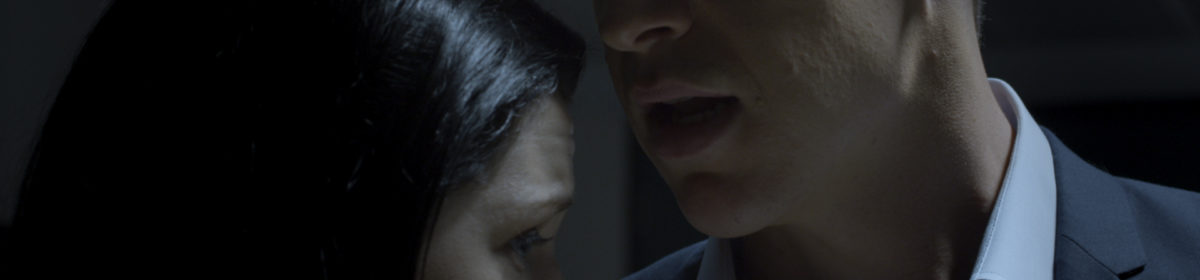
The Closer

I hope everyone with a TV will watch tonight’s episode of The Closer on TNT (9 pm Eastern/8 pm Central). It’s directed by the awesome Nicole Kassell, who is the director of my movie.

Nicky directed The Woodsman with Kevin Bacon and Kyra Sedgwick, so I’m especially interested to see her work with Sedgwick in a completely different role. Have you seen The Woodsman? I highly recommend it. It’s a difficult subject beautifully handled — totally non-gratuitous, totally unsentimental, a very light touch on what in other hands would be material so heavy that it would be unbearable. It’s a tough movie that doesn’t flinch, doesn’t tolerate cliches, doesn’t tell you what to think about any of the characters, and includes moments of joy, hope, recognition, the world turned upside down and then beginning to come together again… I am excited that Nicky’s sensibility, control and obvious love of character is part of my first screenwriting experience.

So go watch some TV. Enjoy Kyra Sedgwick and the always-cool Tom Skerritt (guest-starring), and raise a glass to the minds and hearts behind these stories — the director, the writer, the producer, the crew who help bring it all to life. They’re just as invested, just as stone in love with story, and just as jazzed to see it on screen as any of us who look forward every week to watching our favorite shows.